Preparing for an Italian certification exam like the CILS, CELI or PLIDA is a marathon, not a sprint. You’ve mastered verb conjugations and survived tricky prepositions, but then a seemingly simple topic trips you up: Italian superlatives. One missing article or one wrong preposition, and you’ve lost a point.
You know bello (“beautiful”) and bellissimo (“very beautiful”), but when the question needs il più bello (“the most beautiful”), things get confusing. This guide is your fix: a practical, exam-focused toolkit with one formula for most questions, the irregular forms that always show up, the five mistakes that cost points, and practice in the format your exam actually uses.
Italian Superlatives: Quick Reference
THE KEY PATTERN
Italian superlatives in one line
Article + noun + più/meno + adjective + di = “the most / the least” of a group. -issimo = “very,” with no comparison.
The three types at a glance
| Type | Example | Meaning |
|---|---|---|
| Relative | il film più bello dell’anno | the most beautiful film of the year |
| Absolute | un film bellissimo | a very beautiful film |
| Irregular | il migliore / ottimo | the best / excellent |
Exam rule #1: no article, no point. It’s il ristorante più caro, never ristorante più caro.
Table of Contents
- Diagnostic: Score Yourself First
- The One Formula Behind Most Exam Questions
- Relative vs Absolute: il più bello or bellissimo?
- Agreement: Gender and Number
- The Irregulars That Always Appear on the Exam
- 5 Mistakes That Cost Points
- Practice Quiz: Exam-Style Questions
- Exam-Format Drill: Writing and Speaking
- Italian Superlatives FAQ
- Final Thoughts: Your Exam Plan
1. Diagnostic: Score Yourself First
Before we start, see where you stand. These five sentences are written like typical exam items. Don’t worry about getting them all right: the goal is to find your weak spots.
Fill in each blank in your head (or on paper), then tap Show answer. The hint in brackets tells you which adjective to use and whether it’s “the most” (+) or “the least” (–).
1. Marco è lo studente ___ ___ classe. (bravo, +)
2. Questa torta al cioccolato è ___ ___ di tutte. (buono, +)
3. Tra le tre opzioni, questa è ___ ___ conveniente. (–)
4. Roma è la città ___ ___ d’Italia, con quasi tre milioni di abitanti. (grande, +)
5. Secondo me, questo è ___ ___ film che io abbia mai visto. (bad quality, –)
4–5 correct: Complimenti! (“Congratulations!”) Use this guide to lock in the last points.
0–3 correct: Perfect, you’re in the right place. By the end, these will be easy marks.
2. The One Formula Behind Most Exam Questions
For relative superlatives, when something is “the most” or “the least” of a group, there’s one core pattern. It’s the structure your exam is testing:
The formula
article + noun + più / meno + adjective + di (tra) + group
Marco è il ragazzo più alto della classe. – “Marco is the tallest boy in the class.”
Questa giacca è la meno cara tra tutte. – “This jacket is the least expensive of them all.”
Cannes ospita il festival del cinema più famoso del mondo ogni anno. – Cannes hosts the most famous film festival in the world every year.
Two details make the difference:
- The article is mandatory. Ragazzo più alto alone is incomplete; it must be il ragazzo più alto. Forgetting the article is the number-one error on exams.
- The adjective usually comes after the noun. English says “the tallest boy”; Italian says, literally, “the boy most tall”: il ragazzo più alto. A few adjectives such as bello, grande and buono can also go before the noun (il più bel ragazzo, il più grande scrittore), but the noun-first pattern is always safe in an exam.
Di or tra? The preposition rule
- Di always works, and it’s required with places and groups: il più alto della classe, il più famoso del mondo, la più bella d’Italia, il più bravo di tutti. Remember the contractions: di + il = del, di + la = della, di + i = dei.
- Tra (or fra) only works with a plural set of people or things: il più alto tra i suoi amici, la meno cara tra le tre. With plurals, di works too: il più alto dei suoi amici.
Exam tip: if you’re not sure, di is the safer choice.
Hear every example from a native speaker
Create your free ItalianPod101 account to listen to native audio for every word and sentence, and save them to your own flashcard deck.
Sign Up for Free3. Relative vs Absolute: il più bello or bellissimo?
This is a classic exam trap. You see an adjective and your brain wants to add -issimo. But il più bello and bellissimo answer two different questions.
| Type | Italian | English | What it does |
|---|---|---|---|
| Relative | il film più bello | “the most beautiful film” | Compares one thing to a group |
| Absolute | un film bellissimo | “a very beautiful film” | Describes a high degree, with no comparison |
bellissimo – very beautiful
Imagine the examiner asks: Qual è la città più bella che hai visitato? (“What’s the most beautiful city you’ve visited?”)
- Weak answer: Firenze è bellissima. (“Florence is very beautiful.”) It’s correct Italian, but it doesn’t compare, so it doesn’t answer the question.
- Strong answer: Firenze è la città più bella che io abbia visitato. (“Florence is the most beautiful city I’ve visited.”)
Quick test: can you add “of the group” or “of them all” to your sentence? If yes, you need the relative formula, not -issimo.
Forming -issimo: watch the spelling
Drop the final vowel and add -issimo/-issima/-issimi/-issime. Adjectives ending in -co and -go usually add an h to keep the hard sound:
| Adjective | Absolute superlative | Meaning |
|---|---|---|
| bello | bellissimo | very beautiful |
| facile | facilissimo | very easy |
| lungo | lunghissimo | very long |
| ricco | ricchissimo | very rich |
| simpatico | simpaticissimo | very nice (no h!) |
You can always say the same thing with molto: molto bello = bellissimo. Using both in your writing shows range.
4. Agreement: Gender and Number
The article and the adjective must agree in gender and number with the noun. Exams love lo and gli, so practice those too:
| Singular | Plural | |
|---|---|---|
| Masculine | il ragazzo più alto | i ragazzi più alti |
| Masculine (s + consonant, z, vowel) | lo studente più bravo | gli studenti più bravi |
| Feminine | la ragazza più alta | le ragazze più alte |
Il fine settimana è spesso affollato nelle stazioni balneari più famose. – The weekend is often crowded at the most famous beach resorts.
- Questi sono i migliori ristoranti della città. – “These are the best restaurants in the city.”
- Le mie sorelle sono le più alte della famiglia. – “My sisters are the tallest in the family.”
5. The Irregulars That Always Appear on the Exam
Just like English “good, better, best,” four common Italian adjectives have irregular forms. They show up on every exam, so learn the whole table:
Irregular comparatives and superlatives
| Adjective | Comparative | Relative superlative | Absolute superlative |
|---|---|---|---|
| buono (good) | migliore | il migliore | ottimo |
| cattivo (bad) | peggiore | il peggiore | pessimo |
| grande (big) | maggiore | il maggiore | massimo |
| piccolo (small) | minore | il minore | minimo |
The regular forms exist too (il più buono, buonissimo, il più grande…). Maggiore/minore often mean “older/younger” (mio fratello maggiore) or are used for abstract ideas; for physical size, use più grande/più piccolo. Before a noun, migliore and peggiore often drop the final -e: il miglior amico.
migliore – better, best
Il migliore or il più buono?
- Migliore / peggiore: overall quality, skill and judgment. Secondo me, è il miglior ristorante della città. – “In my opinion, it’s the best restaurant in the city.”
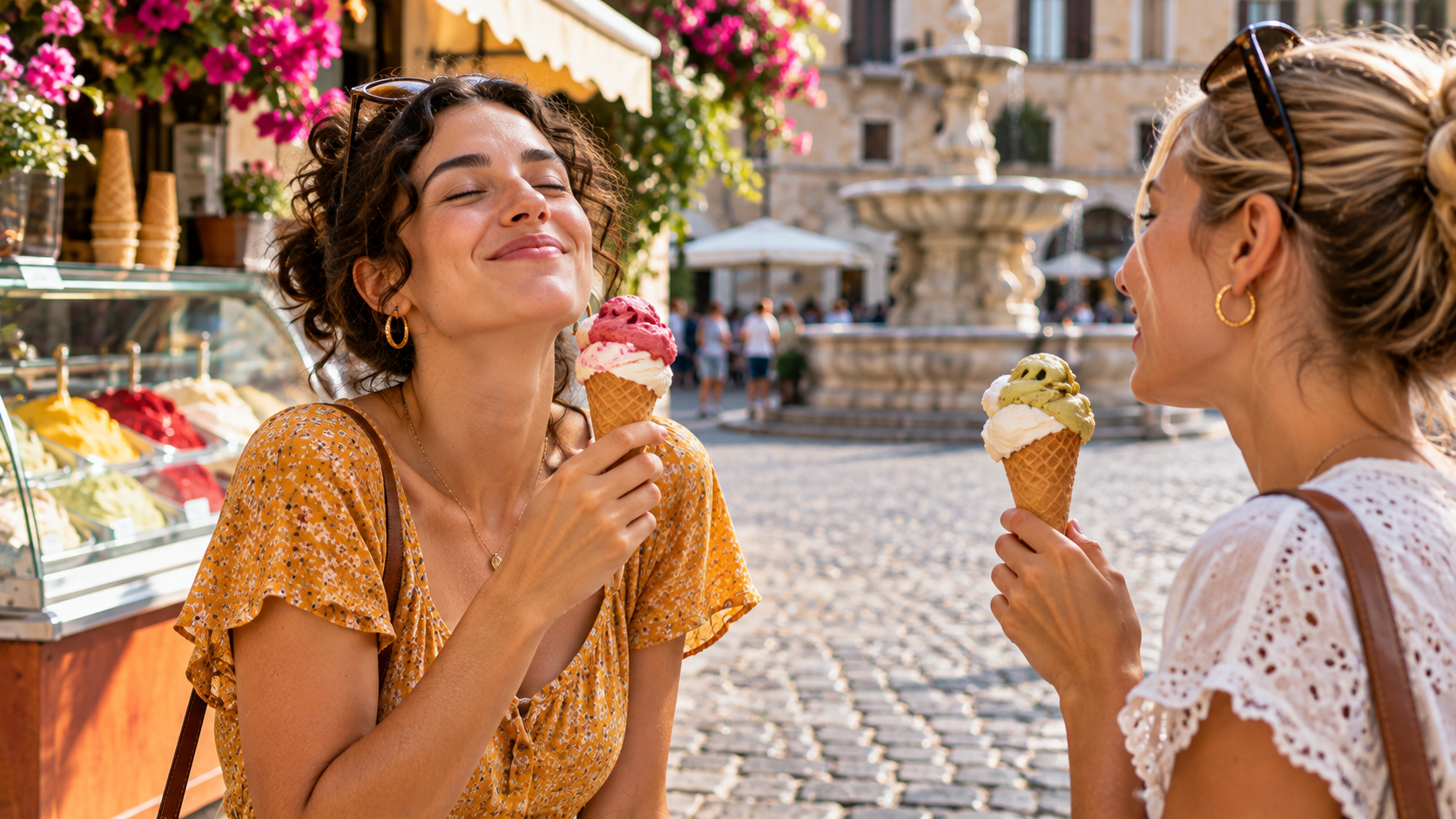
- Più buono / più cattivo: concrete things, especially taste (food) and behavior (people, animals). Questo gelato è il più buono che io abbia mai mangiato. – “This is the best ice cream I’ve ever eaten.”
For food, both la migliore and la più buona are correct, so don’t panic if you see either on the exam.
Il gelato italiano è il più buono! – Italian ice cream is the best!
Mia nonna fa la torta di mele migliore del mondo. – My grandmother makes the best apple pie in the world.
Lui è semplicemente il migliore. – He is simply the best.

Want to hear the rules explained? In the video lesson Italian Comparatives & Superlatives, your teacher walks you through più, meno, -issimo and the irregular forms with lots of examples.
Lock in the grammar before exam day
Watch the video lesson, then practice with audio lessons and flashcards built around the grammar your exam tests.
Watch the Lesson6. 5 Mistakes That Cost Points
Examiners see the same errors again and again. Check your writing for these five:
5 mistakes that cost points
| ❌ Wrong | ✅ Right | Why |
|---|---|---|
| È ristorante più caro. | È il ristorante più caro. | The article is mandatory. |
| il ristorante più migliore | il ristorante migliore | Migliore, peggiore, ottimo… already contain “more/most.” |
| il più bellissimo | il più bello or bellissimo | Choose one: relative or absolute, never both. |
| il film più bello che ho mai visto | il film più bello che abbia mai visto | Formal writing: superlative + che + subjunctive. |
| il più cattivo film | il peggior film / il film più brutto | Cattivo is for people and behavior; for quality use peggiore or brutto. |
About the subjunctive: after a superlative + che, formal Italian uses the congiuntivo: il libro più bello che io abbia mai letto, la persona più gentile che io conosca. You’ll often hear the indicative in casual speech, but the subjunctive is what earns the point in the exam.
7. Practice Quiz: Exam-Style Questions
Five new exam-style items. Tap an answer to check it.
1. Luca e Anna sono ___ della classe. (bravo, +)
2. Which sentence is WRONG?
3. Questo esercizio è ___: lo finisco in un minuto! (very easy)
4. Il Po è il fiume più lungo ___ Italia.
5. È la persona più gentile che io ___. (conoscere)
8. Exam-Format Drill: Writing and Speaking

Now practice the two tasks that appear in exams like the CILS, CELI and PLIDA.
Writing task
Scrivi un breve paragrafo (circa 40–50 parole) per descrivere la tua famiglia. Usa almeno tre superlativi. (“Write a short paragraph, about 40–50 words, describing your family. Use at least three superlatives.”)
Model answer
Nella mia famiglia siamo in quattro. Mio padre è il più alto di tutti e mia madre è la persona più paziente del mondo. Mia sorella è la meno sportiva della famiglia, ma è simpaticissima. Io sono il fratello maggiore e, secondo mia madre, il più disordinato!
“There are four of us in my family. My father is the tallest of all and my mother is the most patient person in the world. My sister is the least sporty in the family, but she’s really nice. I’m the older brother and, according to my mother, the messiest!”
- il più alto di tutti: article + più + adjective + di tutti.
- la persona più paziente del mondo: the full formula, with del (di + il) for a place.
- la meno sportiva della famiglia: meno works just like più.
- simpaticissima and maggiore: an absolute superlative and an irregular form show the examiner your range.
Speaking task
Parliamo delle città italiane. Secondo te, qual è la città migliore da visitare e perché? (“Let’s talk about Italian cities. In your opinion, which is the best city to visit and why?”)

Photo: “Panorama de Florence” by Nono vlf, CC BY-SA 4.0, via Wikimedia Commons
Model answer
È una domanda difficile! Secondo me, Roma è la città più affascinante d’Italia per la sua storia. Però penso che Firenze sia la migliore per l’arte. E tra le grandi città, Venezia è forse la più romantica di tutte.
“That’s a hard question! In my opinion, Rome is the most fascinating city in Italy because of its history. But I think Florence is the best for art. And among the big cities, Venice is maybe the most romantic of all.”
- la città più affascinante d’Italia: the formula with di + place.
- penso che Firenze sia la migliore: an irregular form plus a subjunctive, two bonus points.
- tra le grandi città… la più romantica di tutte: shows you can use both tra and di.
Self-check rubric: for every superlative you write or say
- ✓Did I include the article (il, lo, la, i, gli, le)?
- ✓Did I use di (or tra with a plural set)?
- ✓Do the article and adjective agree with the noun?
- ✓With buono or cattivo, did I consider migliore or peggiore, and avoid più migliore?
- ✓After che, did I use the subjunctive?
9. Italian Superlatives FAQ
What are the two types of superlatives in Italian?
The relative superlative compares something to a group (il più alto della classe, “the tallest in the class”). The absolute superlative expresses a very high degree without comparison (altissimo, “very tall”).
Can you say “più migliore” in Italian?
No. Migliore already means “better” or “best,” so più migliore is always wrong. The same goes for più peggiore and più ottimo.
Do you use di or tra after an Italian superlative?
Use di with places and groups (della classe, d’Italia, di tutti). Tra or fra also works with a plural set of people or things (tra le tre). When in doubt, di is the safe choice.
Why is the subjunctive used after a superlative?
A superlative followed by che expresses a subjective judgment, so formal Italian uses the subjunctive: il film più bello che io abbia mai visto.
10. Final Thoughts: Your Exam Plan
Confidence on exam day comes from correct repetition. Here’s your plan:
- Today: set a five-minute timer and redo the diagnostic and the practice quiz from memory.
- This week: keep an error log. Every time you make a superlative mistake, note whether it was the article, the preposition, agreement, an irregular form or the subjunctive. Your personal pattern tells you what to review.
- Before the exam: review the formula, the irregulars table and the five mistakes. Bookmark this page for a final check.
Keep practicing with these lessons: I’m Better at Italian Than You Are! (comparatives with migliore), He’s in Less Trouble Than I Am?, Comparisons of Equality and Which Italian Food Will Prove the Most Delicious?.
Prepare for your Italian exam with a clear path
ItalianPod101 gives you structured lessons by level, native audio, grammar notes and flashcards, so you can study the grammar your exam tests a little every day.
Start Learning for FreeIn bocca al lupo! (“Good luck!”) Your turn: write your own superlative in the comments. Il posto più bello che io abbia visitato è…